
Ongoing Return: Mapping Memory and Story Telling in Palestine

- Book Author(s):Rana Barakat
- Published Date:January 2026
- Publisher:University of North Carolina Press
- Paperback:297 pages
- ISBN-13:9781469680309
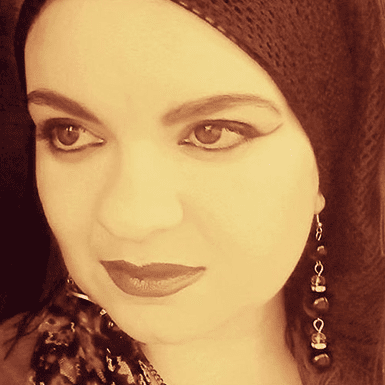
“The geography of Palestine is one, from the river to the sea. The settler military works in different ways to create a fragmented reality for Palestinians,” Rana Barakat writes in the preface to her book Ongoing Return: Mapping Memory and Story Telling in Palestine (University of North Carolina Press, 2026). In the fragments that Zionist settler-colonialism imposed on Palestine, return is inseparable from the continuity of the 1948 Nakba.
Barakat notes that uncovering stories is essential to the Palestinian return to Palestine. The book centres on Lifta’s history and stories, notably those relating to the author’s grandmother, ’Arifa. “Walking through stories is the process – through landscapes, through time and with people, a we continue to return to Lifta and to Palestine,” Barakat writes. She contrasts maps of memories with actual cartography, noting that stories and memories are not necessarily bound by settler-hegemony, which is prevalent in many narratives dealing with Palestine. There is nothing linear in memory, or in return. The author notes that three generations of women – the grandmother born in Lifta, the mother born in the Old City of Jerusalem, and the author herself born in Chicago – carry stories that embody both an ongoing rupture and an ongoing return.
The centrality of land to stories is prevalent in Indigenous peoples. Barakat explains how story telling becomes central when the Indigenous are faced with the colonial appropriation and exploitation of land.
On one hand, there is colonialism, displacement and exploitation. On the other, the Indigenous culture is rooted in nurturing the land. In keeping to the Indigenous narratives, Barakat’s book explores how Palestine exists in parallel trajectories. One is dominated by the settler narrative which informs global perceptions. The other, much less talked about, is the Palestine which Palestinians have either experienced, known, or learned about as a result of oral history. Barakat points out the discrepancy through maps. Cartography reflects imperialism and colonialism, while the emotional maps of Palestine, alive for Palestinians, “are not merely erased from colonial maps and settler archives; they never existed within those structures.”
BOOK REAVIEW: The Complicit Lens: US Media Coverage of Israel’s Genocide in Gaza
Walking through Palestine, therefore navigates settler-colonialism and refuses to be confined by it. Yet, the stories of Palestinians, in this case ’Arifa, are also victims of the colonial structures, including maps and archives. Throughout the book, Barakat questions how Palestinians can present and articulate their narratives without confining themselves to the settler-colonial structure; the latter having influenced how Palestinians think of and relate to Palestine in terms of belonging.
The Nakba is imperative to the discussion and Barakat commences with an understanding of the Palestine Liberation Organisation’s trajectory from liberation movement to gradual decline as it embraced diplomacy and negotiation with settler-colonialism.
From refusing to accept defeat in 1967, to becoming the epitome of defeat in the 1990s, Barakat writes of how land in the diplomatic process became fragmented into negotiated territories.
In discussing Lifta, Barakat notes that as the “only abandoned Arab village in Israel not to have been destroyed or repopulated since 1948,” the settler narrative still remains prominent. In preservation, destruction is still eminent, and the disappearance of Palestinians remains central to preservation. Preservation, Barakat argues, “serves settlers’ interests; restoration serves Indigenous interests.” The problem of heritage also lies with the imperialist constructs of heritage, as the author illustrates when discussing UNESCO and Palestine’s inclusion in the organisation. Saving Lifta, for example, is constructed around the concept of world heritage. However, Palestinian heritage is also part of Palestinians’ resistance and resilience. The rewriting, or reframing, of Palestinian heritage by international organisations “mirror the politics of the Israeli state as a settler state, as well as the PA as a governing entity trapped within this settler matrix.”
As the book moves towards a discussion of oral history, Baraket situates Lifta as one of many “sites of ongoing return”. She refutes exceptionalism in Lifta’s case. Return, she argues, would need to move beyond preservation, and as an ongoing concept, needs to be linked to other sites of struggle against settler-colonialism. Return, also, has to contend with the limitations placed upon Palestinians by colonial frameworks – a visit to Lifta, for example, does not mean continuity. How do Palestinians who visit home grapple with return in a space that is bound by time and colonial frameworks?
Barakat acknowledges the limitations: “Because historical dispossession has also resulted in a lack of any kind of access to the land, visiting can be an opportunity, albeit one with grave limitations. As such, the lines between personal, intellectual and political are blurred in the emotional turmoil of seeking any kind of physical connection to land that has long been denied.”
In terms of oral history, Barakat notes that the settler-colonial frameworks are still incarcerating memory. In connecting with her own family history, the author walks through memory as mentioned earlier in the book, following Lifta’s history through a history of her own family history commencing with that of her grandmother: “This is how we learn to move beyond, not confined by settler spaces and settler time.” To gain access to these narratives, Barakat writes, is a sensitive issue, given the Nakba as an ongoing rupture.
The book culminates in an exploration of memory and oral history as Barakat learns about her grandmother, and her heritage, through listening to narrations of people from Lifta, as well as from her own mother.
Geography and people become intertwined, as Palestinians from Lifta speak not only of their connection to the village, but also of what Lifta symbolises, or is, in terms of Palestinian history. As the narratives shift from personal to the Nakba and how it started for people living in Lifta, the individual memories gradually merge into the collective, while still preserving each individual’s voice.
Barakat’s research is multilayered and additional readings of the book, or parts of it, will definitely increase both understanding of the many nuances and contradictions inherent in preserving Palestinian oral history. “I refuse to write an ending for a story that shall not end,” Barakat’s final sentence in the book reads, Reflecting the ongoing rupture as well as reflecting the ongoing return.