
Israel is replacing historic Arab place names in Jerusalem while intensifying measures against Palestinian institutions and officials in the occupied city.
Key Developments
- The Jerusalem Governorate accused Israeli authorities of systematically replacing traditional Arab names of streets and landmarks with Hebrew alternatives.
- Authorities reportedly removed signs identifying Bab al-Amoud, or Damascus Gate, and installed a sign reading “Old Gate.”
- Palestinian Minister for Jerusalem Affairs Ashraf al-Aawar was detained near Al-Aqsa Mosque on Wednesday, his second detention within a week.
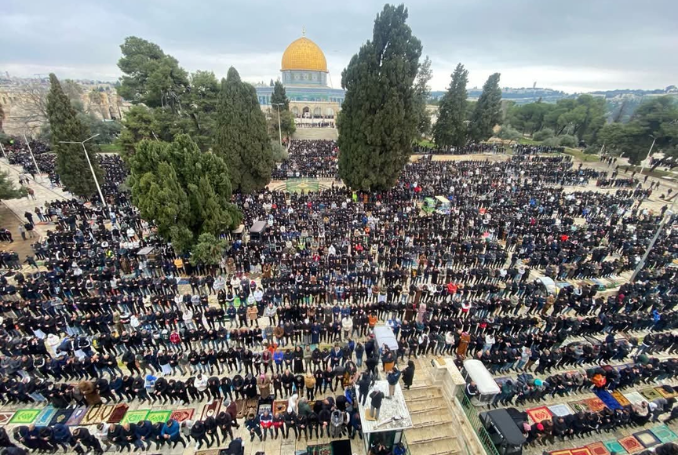
Israeli authorities are replacing historic Arab names across occupied Jerusalem in what Palestinian officials describe as an attempt to reshape the city’s identity and erase its Arab, Islamic and Christian heritage.
The Jerusalem Governorate said Wednesday that Israeli authorities had removed signs bearing the historic name of Bab al-Amoud, widely known in English as Damascus Gate, and installed a sign identifying the landmark as “Old Gate.”
Bab al-Amoud is one of the principal entrances to Jerusalem’s Old City and one of its most recognizable Palestinian landmarks.
The governorate said the change should not be viewed as an isolated administrative decision, but as part of a broader Israeli policy targeting the historical and cultural landscape of Jerusalem.
According to the statement, the names attached to the city’s gates, streets and landmarks constitute part of Jerusalem’s “national, historical and cultural memory.”
The governorate warned of “continued efforts to alter Jerusalem’s historic character,” but said attempts to impose new names and realities would “not erase the city’s history or collective memory.”
The controversy comes amid a series of Israeli measures targeting Palestinian institutions and officials in occupied East Jerusalem.
On Tuesday, Israeli forces seized the Qalandia Vocational Training Center operated by the UN agency for Palestinian refugees, UNRWA.
Israeli forces evacuated staff, took control of the compound and raised an Israeli flag in its courtyard. The Jerusalem municipality subsequently sent crews into the facility to begin work ahead of plans to establish a municipal educational complex there.
A day later, Israeli authorities detained Palestinian Minister for Jerusalem Affairs Ashraf al-Aawar while he was attending a family mourning gathering in Silwan, near Al-Aqsa Mosque, according to the Jerusalem Governorate.
Israeli authorities had previously detained al-Aawar at his Silwan home and held him for several hours before releasing him without providing a reason, according to the governorate.
Last year, Israel also barred the Palestinian minister from entering the occupied West Bank for six months, a restriction that was subsequently extended.
Palestinian authorities have long accused Israel of attempting to alter Jerusalem’s Palestinian identity through settlement expansion, demolitions, restrictions on Palestinian institutions and changes to the city’s physical and cultural landscape.
East Jerusalem has been under Israeli occupation since 1967. Israel subsequently annexed the territory in a move that is not recognized internationally.
UN Security Council Resolution 478 and other UN resolutions reject Israeli measures intended to alter Jerusalem’s character, demographic composition, legal status or political status.