
By Iqbal Jassat
The language of a rules-based international order becomes conditional, dependent not on law but on political convenience.
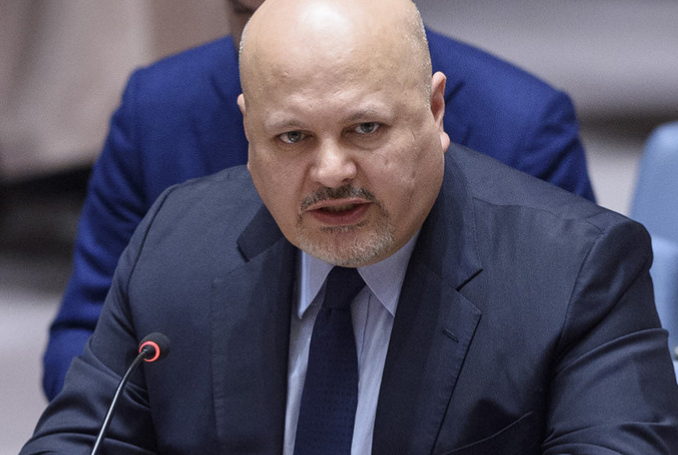
“The dismissal of Karim Khan as the ICC prosecutor is perhaps the most significant event in the 24-year-long institutional history of the ICC,” says Sergey Vasiliev, professor of international law at Open University in the Netherlands.
It is “the greatest setback to the Court’s efforts to pursue justice in situations implicating major powers and their allies not party to the Court, including the US, Israel, and Russia,” Vasiliev added.
There cannot be any doubt that the credibility of international justice is measured not by how it treats the weak, but by what happens when it is manipulated by the rich and powerful.
A close scrutiny of the Israeli-led campaign surrounding ICC Prosecutor Karim Khan exposes a familiar pattern. Institutions celebrated as guardians of the rules-based international order become targets of political pressure the moment they threaten the interests of states that enjoy Western protection.
Regrettably, absent from much of the media coverage is the chronology that transformed Khan from a respected international prosecutor into a political liability.
The same can be argued about the absence of the global South to ensure an impartial probe, even at this late hour, to determine what apparently is driven by a highly-charged Zionist political agenda.
For years, the International Criminal Court was embraced when it pursued African leaders, Balkan figures and, more recently, Russian officials.
That consensus fractured after Khan sought arrest warrants against Israeli Prime Minister Benjamin Netanyahu and former Defense Minister Yoav Gallant over alleged war crimes and crimes against humanity in Gaza.
From that moment, the court itself became the subject of sustained political attacks.
The allegations of workplace misconduct against Khan deserve to be investigated independently and fairly. No public official should be immune from scrutiny.
Equally, those allegations cannot be used to erase the wider political context. Both realities can exist simultaneously. An investigation into personal conduct does not negate the documented efforts by governments and lobbying networks to obstruct the ICC’s Palestine investigation.
Reducing the entire issue to Khan’s personal conduct conveniently diverts attention from the institution he represents and the cases it is pursuing.
The beneficiaries of this narrative are clear. Governments determined to shield Israel from international accountability have consistently challenged the legitimacy of the court whenever its investigations touched Israeli officials.
Political leaders, influential lobbying organizations and sections of the Western media have increasingly portrayed the ICC as overreaching, despite previously defending its authority in other conflicts.
The objective is larger than one prosecutor. It is to weaken the credibility of any institution capable of holding powerful allies to the same legal standards imposed on others.
This pattern is neither new nor unique. International law has repeatedly encountered fierce resistance whenever it challenges geopolitical interests.
From Iraq to Afghanistan, from Libya to Palestine, the principle remains remarkably consistent.
However, what we face is that accountability is welcomed only when directed at adversaries but resisted when it reaches allies.
Double standards and hypocrisy are a blatant trademark for Western imperialism.
The language of a rules-based international order becomes conditional, dependent not on law but on political convenience.
Media coverage has largely reinforced this selective framing. To any independent observer able to read between the lines, it is pretty clear that headlines have focused on Khan as an individual while giving far less attention to the sustained political campaign against the ICC itself.
The real issue has never been Karim Khan alone. It is whether international law can survive when its reach extends beyond the politically expendable and touches those protected by geopolitical power.
Hence the question: Does the legitimacy of the ICC depend on the identity of those it investigates?
In pointing out the backdrop, Sergey Vasiliev says it is “US sanctions against ICC senior officials and its campaign to dismantle the institution, as well as the Israeli government’s long-term interference and its most recent efforts to exert influence on States Parties to oust Khan”.
Vasiliev finds himself “truly worried about the future of the Court and whether States Parties will be willing and able genuinely to protect its independence and ensure its recovery after this ‘decapitation’,“ as he calls it.
– Iqbal Jassat is an Executive Member of the South Africa-based Media Review Network. He contributed this article to The Palestine Chronicle. Visit: www.mediareviewnet.com