
Introduction
People across the world are living through a moment of profound crisis. The ongoing genocide in Gaza, the US-Israeli war on Iran and Lebanon, the resulting energy and economic shocks, and the erosion of the international legal order are unfolding alongside the fragmentation of the Western-led global system. Together, these converging tremors are exposing the limits of US hegemony, reshaping the strategic positions of Arab Gulf states and China, and intensifying debates over multipolarity, regional realignment, and South-South solidarity.
In this roundtable, Yara Hawari and Tareq Baconi reflect on this impasse, highlighting the centrality of Palestine to understanding the historic transformations the world is witnessing today. They discuss the bankruptcy of the liberal international order, the changing dynamics of the US-Israeli imperial power in West Asia, and the ways Palestine has emerged as a converging point through which a different global order may be forced into being.
This roundtable is adapted from a briefing delivered by Yara Hawari and Tareq Baconi in April 2026. It has been edited for publication.
How does the present moment connect to longer histories of colonial and imperial violence?
Yara Hawari
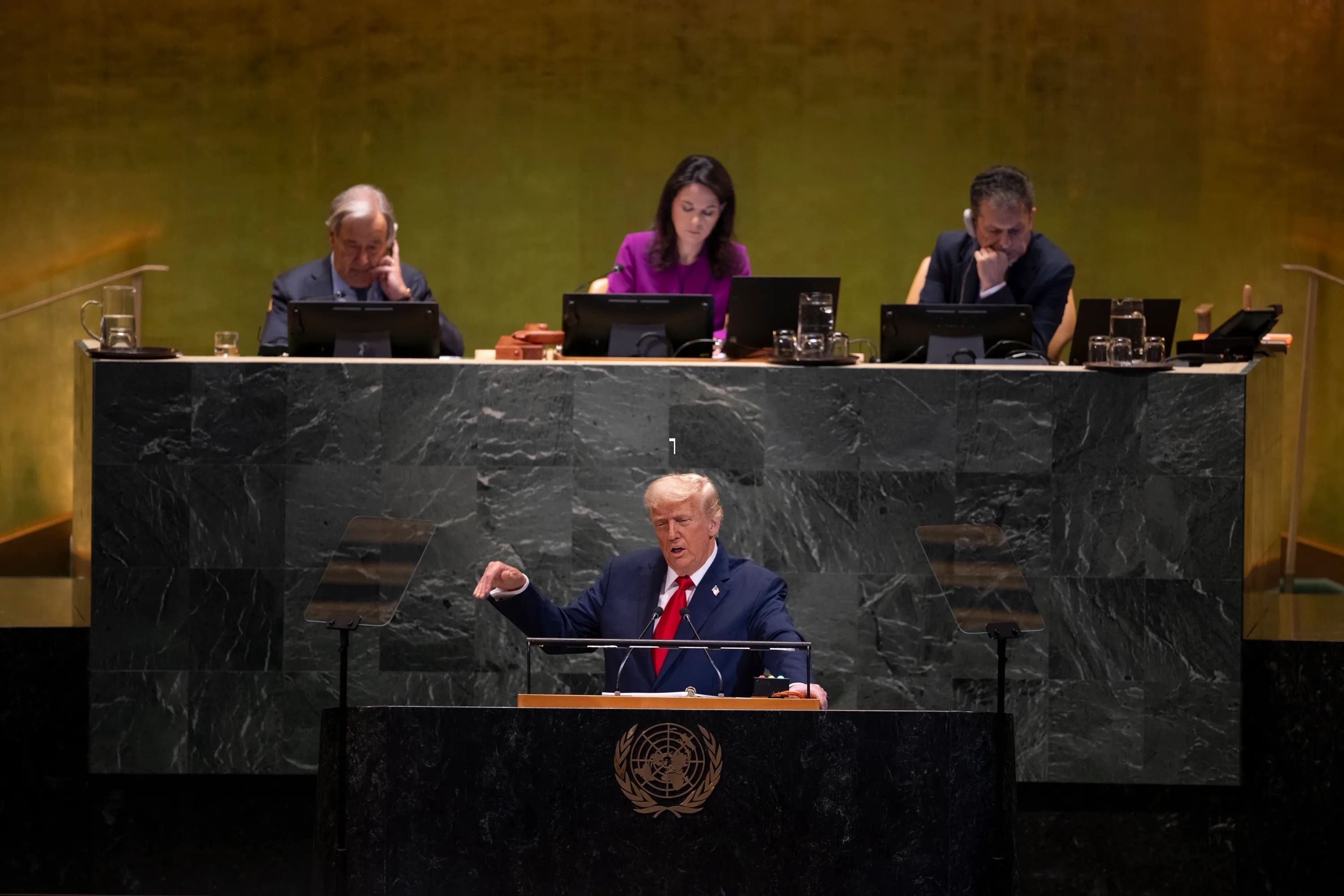
This is a profound moment of reckoning, not only for countries subjected to colonial and imperial violence, but for the world at large. Europe is not insulated. When Spain refused to allow the US to use its military bases to conduct strikes on Iran, President Donald Trump responded by saying the US could use them regardless, directly threatening Spain’s sovereignty. I think governments are beginning to understand that they can no longer dismiss such statements as erratic Trumpian ramblings, but must instead recognize them as ominous signs of things to come.
The brazenness of the US-Israeli assault on humanity is, in many respects, the consequence of decades of unchecked impunity SHARE ON X
Yet, while there is an effort to reshape global politics, we must also understand this moment not as an aberration in US history but as a predictable trajectory. Indeed, successive administrations laid the foundations, from George W. Bush to Barack Obama and beyond.
Palestine sits at the center of these dynamics. The brazenness of the US-Israeli assault on humanity is, in many respects, the consequence of decades of unchecked impunity. Western states have given the Israeli regime carte blanche over Palestinians: a genocide has been livestreamed to the world while trade relationships continue and diplomatic cover is maintained. The cost of that calculus has proven far greater than anticipated.
The consequences of that impunity are no longer confined to Palestinians or to the people of southern Lebanon. Ordinary people in the West are now facing a rising cost-of-living crisis because the US and Israeli regimes—emboldened by decades of unaccountable violence against Palestinians—decided to start a war with Iran. Everyone is now paying the price of that impunity. The consistency and breadth of that impunity, and the depth of Western complicity, are the variables that explain the trajectory we are now on.
Tareq Baconi
The war on Iran reveals something crucial about the positions from which US and Israeli power are now operating. We are witnessing a resurgence of explicitly imperial and colonial language on the global stage: a US president whose rhetoric mirrors the language the Israeli regime has always deployed toward Palestinians, backed by extraordinary military force and aggression.
But this aggression is a sign of decline, not strength. Today, US hegemony and Israeli settler colonialism are both unfolding through excessive force, extreme violence, and escalation precisely because their legitimacy is eroding. We see this clearly within Zionism: in many ways, it is at its weakest historical point, and that weakness is manifesting as aggression, devastation, and mass killing. Understanding this dynamic is essential to understanding Palestine’s place in these shifts in global power. That is, an empire becomes most violent when it still has the capacity for force but has lost the ability to maintain legitimacy or stability.
How should we understand the US-Israeli relationship at the current moment?
Tareq Baconi
On the question of who is driving what in the US-Israeli relationship, there is a specific point to make about the war with Iran: this is not Washington’s war. This is Israeli Prime Minister Benjamin Netanyahu’s war, one he has been pushing for years and finally found an open door to with the Trump administration. But to understand how that became possible, we have to go deeper into the structural relationship between the two states.
An empire becomes most violent when it still has the capacity for force but has lost the ability to maintain legitimacy or stability SHARE ON X
That relationship operates on two levels. The first is ideological. Both the US and Israel are settler colonies—in other words, states built on mass extermination, forced displacement, and ethnic cleansing, and sustained by a racial-capitalist infrastructure. Israel has long fascinated the US because it has managed to present itself as a democracy while overseeing a system of apartheid. And the US fascinates the Israeli regime because it represents, in the settler-colonial imagination, a project that “got the job done”—a state that dispossessed its indigenous population and then successfully assumed that dispossession as the foundation of “democracy.” Neither of those stories is true: Indigenous peoples across Palestine and Turtle Island continue to resist. But the settler narrative is one of victory, and it creates a deep ideological bond among colonial regimes. If Israel were to fail as a settler-colonial project, it would amount to an indictment of the US itself.
The second level is geopolitical. The Israeli regime is not merely an ally; it is central to US settler colonialism and to the projection of its empire globally. It allows the US to project imperial force not only across the region but beyond it. All the language of the “special relationship,” of “no daylight” between Washington and Tel Aviv, and of “shared values” reflects not merely sentiment but, more importantly, structural necessity.
What makes this ongoing war particularly revealing is that it is also exposing the fissures within that relationship. By pushing the US into this war with Iran, the Israeli regime is exacerbating contradictions that already exist domestically among Americans. More and more people are asking whether these are truly shared values the US claims to have with the Israeli regime, and whether endless wars of this kind serve anyone’s interests. Indeed, the way the Israeli regime continues to pull the US into permanent violence does not serve the American people, and this is becoming impossible to ignore.
Yara Hawari
What has become clear from the months since the war on Iran began is that Trump and his inner circle do not have a plan. Initial talk of degrading Iranian missile capacity and removing enriched uranium came to nothing. Regime change was floated and then walked back. There is no coherent US strategy. Netanyahu, however, very clearly does have one. We are witnessing the apex of his vision of “Greater Israel,” which is not only about territorial expansion but also about establishing Israel as the preeminent power in the region.
The questions now emerging…center on how to build a genuinely multipolar world order and how Palestine can serve as the converging point that forces that order into being SHARE ON X
Reports from inside the White House suggest that Netanyahu pitched a regime-change war to Trump and that, despite serious internal divisions, the US president ultimately bought into what the Israeli prime minister was selling. This is largely thanks to a small cohort of war-mongers and die-hard Zionists, including Senator Lindsey Graham and Secretary of Defense Pete Hegseth, who have become central figures in Trump’s administration. This is not to suggest that the US is otherwise averse to inflicting violence on the world. But on the specific question of war with Iran, the longstanding consensus across US government agencies was that such a war would be catastrophic for the US and for the global economy. They were right.
We must be careful, however, not to mistake this for US submissiveness to Netanyahu—a narrative now being adopted by the anti-Israel far-right in the US. To do so is to obscure the long history of violent US interventionism across West Asia and to let Washington off the hook for its own agency at this moment.
Trump, for his part, is not an ideological man. He is not a Zionist—certainly not in the way former US President Joe Biden is, for example. Indeed, other forces are at play. There is a transactional dimension: Israeli-American billionaire Miriam Adelson was the single largest donor to Trump’s 2024 campaign, and such mega-donations come with expectations. There is the ego dimension: Trump was sold the idea that he could be the president who finally toppled the Iranian regime. And, finally, there is the profit dimension, perhaps the most important of all: Trump is privatizing every aspect of US governance, including diplomacy, in the service of dynastic wealth.
Trump remains unpredictable, and the coming months carry real unknowns. What is clear is that something has shifted within a significant section of MAGA, the right-wing nationalist populist movement organized around Trump’s America First agenda. Many within its base now believe he has betrayed them for a foreign power. That damage seems irreparable.
How are regional shifts and attacks on Palestine’s allies reshaping Palestinian strategy and support?
Yara Hawari
The Arab Gulf states now face an acute dilemma. There is a tried-and-tested formula emerging from this war: if Iran is attacked by the Israeli regime or the US, the response will target the Gulf states—as US allies and as hosts of its military installations. At the same time, the US has proven unable to guarantee the security of the Gulf states, a foundational premise of the US-Gulf relationship. As a result, Washington’s credibility as a regional hegemon has been seriously hollowed out.
It is therefore not surprising that China is emerging as a key player in the region. Notably, in the last few months, Chinese diplomats have engaged in intensive yet subtle diplomacy with Gulf states. China’s presence in the region is not new; it has been integrating into the region for years through projects such as the Belt and Road Initiative. It is therefore not a huge leap for Beijing to put forward a multipolar vision for a regional order oriented towards its own continent.
This geopolitical realignment is also significant for the Palestinian liberation movement, as evidenced by current efforts to deepen engagement with the Global South. For years, much of Palestinian civil society and grassroots organizing has been centered on the US and Europe. Yet decades of engagement with Western policymakers and journalists failed to produce the structural change needed to stop the genocide. That realization has been painful, but also necessary.
The questions now emerging from engagement with the Global South center on how to build a genuinely multipolar world order and how Palestine can serve as the converging point that forces that order into being. In fact, the Gaza genocide has exposed the limits of the post-World War II international architecture. The urgent task now is to imagine and build what comes next.
Tareq Baconi
If we are looking specifically at the Palestinian national movement and the liberation struggle, it is clear that we are in a very sensitive period. Apart from that brief era in the 1960s and 1970s when the Palestinian revolution was in active conversation with other global anti-colonial movements, Palestinian diplomacy has been oriented almost entirely toward the West. It has been shaped by the language of liberal universalism and by a belief in Western-led institutions of international governance. That orientation has profoundly influenced how Palestinians have pursued their struggle.
As the US empire recedes and existing systems of international governance falter, what alternatives can the Global South build? Palestine is central to that question SHARE ON X
We now understand that those Western liberal systems have failed. Many of us have argued this for a long time, but the genocide in Gaza has made it undeniable. The difficult reality is that Palestinians and their allies across the Global South have not yet built the infrastructure needed to transcend that reliance. Doing so requires moving beyond an implicit acceptance of Western hegemony, empire, and colonialism, and toward a different reality: one in which systems of international governance can actually protect human life without racism or imperial domination. That is not a simple transition.
But I also think this moment presents an extraordinary opportunity, one that takes Palestine out of its state of exception. When we talk about reshaping the region or building deeper alliances across the Global South, many actors have a vested interest in confronting the Israeli regime. Israeli colonial violence has not stopped in Gaza; its tactics are already being exported to Syria, Lebanon, Iran, and the expansionist logic reaches beyond the present into other places in the future.
The broader conversation that must now take place is this: as the US empire recedes and existing systems of international governance falter, what alternative can the Global South build? Palestine is central to that conversation.
What should we watch for in the months ahead, and what does the Palestinian liberation movement need to navigate what is coming?
Yara Hawari
Several things come to mind. Most urgently, the Israeli regime will make a concentrated effort to finish what it started in Gaza and across the rest of Palestine. There have been few consequences for the genocide thus far, and in Netanyahu’s calculus, this represents the opportune moment to complete the project.
Upcoming Israeli elections will not change this. Polling consistently shows that the regime’s policies enjoy majority support among Israeli Jewish citizens. Any change in government will reflect fatigue with Netanyahu, not with the war or with the ethnic cleansing of Palestinians. It is therefore essential that the spotlight remain fixed on Palestine, especially on Gaza, where the genocide has not ended but rather entered a new phase.
Second, in light of the geopolitical shifts underway, the movement must position itself ahead of the curve. This means sustained engagement with the Global South, including, and perhaps more urgently, with people much closer to home across the region. The genocide has revealed the depth of the oppression experienced by our comrades across West Asia.
Finally, the movement must hold firm to its principles and ethics because both will be tested as it continues to grow. Building a broad-based movement is vital, but not at the cost of our red lines and core values. One concrete example is the emerging conversation around how to engage with the fractures opening up within MAGA and the US far-right over Israel. Those fractures are real and may be tactically useful. But any engagement must not compromise the movement’s progressive foundations. Our movement is large but also fragile, and must be protected.
Tareq Baconi
Beyond the immediate war and the ongoing genocide—both of which demand our continued attention—there are several developments worth watching closely.
At the regional level, a critical question is whether Iran might gain a strategic advantage after this war. This will determine whether the Israeli regime can achieve the regional military hegemony it is pursuing. How successfully Iran navigates this moment and what it secures at the end will shape the entire regional calculus.
Equally important is how the Gulf states respond and what lessons they draw. The framework that preceded this war—US military dominance undergirded by Israeli hegemony, the Abraham Accords, and the alignment of Gulf authoritarianism with US and Israeli imperialism—has effectively collapsed. How the Gulf states reposition themselves in its aftermath, and the roles that China and Russia play in that repositioning, will be defining.
Turkey is another key variable. It is clear that Turkey is in the Israeli regime’s crosshairs; neutralizing it is part of what the Zionist regime’s regional hegemony would require. Its position in the emerging regional constellation will matter enormously.
Within Palestine itself, the picture is alarming. The Israeli regime is expanding and accelerating its colonization of Gaza and the West Bank through horrifying violence. The so-called Yellow Line in Gaza has been unilaterally declared a new border. The threat of ethnic cleansing hangs over the West Bank. Across historic Palestine, the Greater Israel project is being actively consolidated even as the language of reconstruction, ceasefire, and a return to normalcy is deployed to obscure it. This expansion extends into Syria and Lebanon as well, where a scorched-earth settlement policy is underway.
Ultimately, Palestinians must resist the pressure to return to a pre-genocidal war status quo dressed up as progress. What October 7 did was place the entirety of the Zionist settler-colonial project in Palestine under a level of scrutiny not seen before. Palestinians must hold onto that opening and insist that what this moment calls for is not a ceasefire that normalizes genocide and ethnic cleansing, but full decolonization.
Yara Hawari is Al-Shabaka’s co-director. She previously served as the Palestine policy fellow and senior analyst. Yara completed her PhD in Middle East Politics at the University of Exeter, where she taught various undergraduate courses and continues to be an honorary research fellow. In addition to her academic work, which focused on indigenous studies and oral history, she is a frequent political commentator writing for various media outlets including The Guardian, Foreign Policy, and Al Jazeera English.
Tareq Baconi serves as the president of the board of Al-Shabaka. He was Al-Shabaka’s US Policy Fellow from 2016 – 2017. Tareq is the former senior analyst for Israel/Palestine and Economics of Conflict at the International Crisis Group, based in Ramallah, and the author of Hamas Contained: The Rise and Pacification of Palestinian Resistance (Stanford University Press, 2018). Tareq’s writing has appeared in the London Review of Books, the New York Review of Books, the Washington Post, among others, and he is a frequent commentator in regional and international media. He is the book review editor for the Journal of Palestine Studies.